Inauthentic Content:How To Avoid Being Demonetized AND Get Your Channel Back If You Already Are
The 8 fixes that keep you out of the danger zone — plus the exact appeal playbook for the channels that already got hit. Built from real demonetization cases and the channels that came back.
 Watch on YouTube
Inauthentic content is not what everyone thinks it is.
Most of the people making videos about this are wrong. Before we get into the 8 tips, let's lock in what the policy actually means — so you know what we're fixing.
This is not a ban on AI. It is a ban on mass production, templates, and replaceable content with no human fingerprint on it.
The Swap Test
If you could swap your channel with 5 other channels in the same niche and nobody would notice the difference, your channel is inauthentic by YouTube's own definition. The Gemini AI is looking for distinct identity. You need to give it one.
- Pull up your last 5 videos side by side.
- Cover the channel name and avatar.
- Show the 5 thumbnails and titles to a friend who doesn't watch your content.
- Ask: "Can you tell these belong to the same channel and not some other channel in this niche?"
- If they say no, you're in the danger zone right now.
Cloning a proven competitor format 1-to-1 with no identity layer on top. The faster you cloned, the faster you'll get flagged — you're contributing to exactly the pattern YouTube is punishing.
 Passes · Strong identity
@HoodieGuyStories
Influencer-led. Face on camera, distinct personality, his own telling style. Nobody else is this specific person delivering these specific stories. The identity layer is impossible to mass-produce.
 Harder case
@doggyzuko
The content is genuinely original. But without a face or distinct voice signature, it's much harder to prove to YouTube's AI that mass production isn't happening under the hood. The channel was hit for inauthentic content even though a real human was animating every frame. Same niche, same format, faceless — the Swap Test gets much harder to pass.
Break the Template
YouTube's AI isn't flagging your content. It's flagging your pattern. Same title structure, same thumbnail layout, same script opener, same visual rig, video after video. The platform reads that as a bot-like operation even when a human is behind it. There are three surfaces where the repetition shows up. All three have to break.
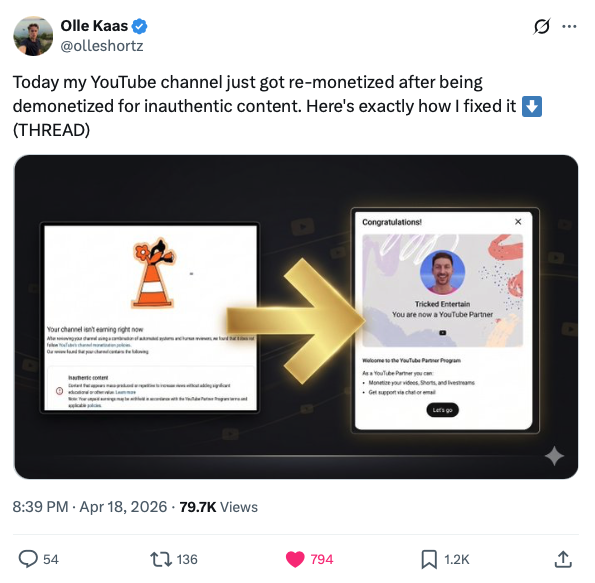
One of my clients was using the exact same title structure on every Shorts upload. That alone got him demonetized for inauthentic content. We appealed. Got nowhere at first. Then I posted publicly on Twitter, the post went massively viral, and his channel was re-monetized within days.


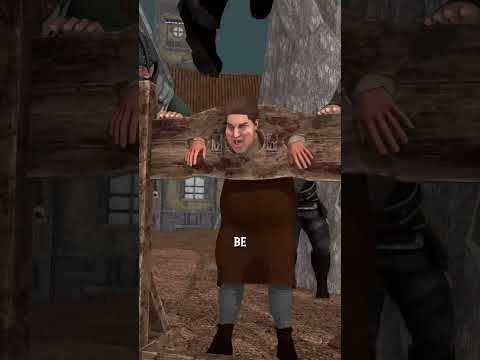
This is how the AI is actually reading your channel. Three different Polemod scripts. Three different scenarios on the surface. But read them:
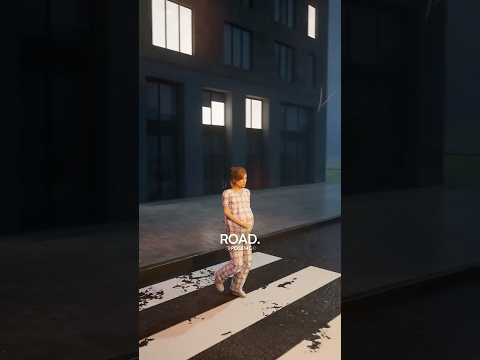


Same opener. Same binary. Same transition. Same 4-AI sequence. Different topics, identical script template. That is exactly the fingerprint Gemini is trained to flag.
- Run at least 5 active formats on the channel at once.
- Rotate your posting so no two consecutive videos share format, title pattern, or thumbnail layout.
- Keep title style, thumbnail composition, and script structure different across the 5 formats.
- Audit monthly: pull the last 20 uploads. If the same title formula appears more than 3 times, rewrite the 4th one.
"The lonely man met the secret wife at the hospital" → "The lonely husband met the secret wife in the car" → "The lonely man met the secret wife on the mountain." Swapping one noun is not variety. YouTube's AI reads the structure, not the words.
Prompt — Repetition Checker
Paste into ClaudeDrop your last 10 titles below the prompt. Claude will score your repetition risk 1-10, flag the patterns, and rewrite your 3 most-repetitive titles.
You are a YouTube strategist analyzing a channel for inauthentic-content risk under YouTube's 2026 repetition policy.

I will paste my last 10 video titles below. Audit them for:
1. Structural patterns (same sentence structure, same word count, same formula)
2. Repeated power words — if any word appears in 5+ titles, flag it
3. Format homogeneity — do they all follow the same hook style?

Then output:
— Repetition risk score 1 to 10 (10 = highest risk).
— Top 3 patterns you see.
— Rewrite my 3 most-repetitive titles so they still work but break the pattern.

Be direct. No disclaimers. No fluff.

MY LAST 10 TITLES:
[paste here]
Prompt — 5-Format Title Generator
In Tim's voiceFeed it a topic and it generates 5 titles across 5 completely different formats. Use this to refill your title bank so you always have variety on deck.
You are writing YouTube titles in the voice of a practitioner who runs a $700K/year portfolio. The voice is numbers-heavy, contrarian, practitioner-first, never guru-to-student, and always anchored to a real result.

Give me 5 titles on the topic below. Each MUST use a different format:

1. NUMBER-LED CONTRARIAN — specific revenue, view count, or timeframe. "$X in Y months doing Z." "I tested X for Y days so you don't have to."
2. QUESTION REFRAME — challenges the viewer's assumption. "Why [common belief] is actually [opposite]."
3. DIRECT CALLOUT — blunt instruction. "Stop doing X." "Never [thing]."
4. CASE STUDY FRAME — named channel or operator. "How [channel] went from X to Y." "Why [channel] is printing right now."
5. HOW-TO UTILITY — specific outcome, no fluff. "How to [specific result] in [timeframe]."

Rules:
— No em-dashes or m-dashes.
— Every title must feel like it came from someone actually running channels, not theorizing.
— No generic motivation language.
— Keep each title under 70 characters.

TOPIC:
[paste here]
Protect Yourself From AI Voice Detection
I'll be straight with you — I don't personally believe AI voice alone is what's getting channels hit. But enough people are pointing at it that it's worth insulating against. If the theory is right, you want armor on. If it's wrong, you still come out ahead with a unique voice no other channel is using.
Work down the list. Pick the highest option you can realistically run.
- Clone your own voice in ElevenLabs. 100% unique audio fingerprint no other channel can reproduce.
- Use ElevenLabs V3 or a custom-designed voice. Newer model, cleaner, not on the top 10 most-used list.
- Raise the instability setting. Breaks the flat TTS cadence the detection system is pattern-matching on.
- Hire a voice actor on Fiverr or Upwork with exclusive rights. The rights clause matters. Exclusive = no other channel using that voice. If someone clones it, you can strike them.
- Use your real voice. Channel stays 100% faceless. Audio fingerprint is 100% yours.
The top 4 "black checkmark" ElevenLabs voices every other channel is using. If you are using Adam with ChatGPT-generated scripts, you are producing audio that matches 10,000 other channels at the waveform level.
Use AI Scripting Protocols, Not ChatGPT
Stop writing scripts with ChatGPT or any generic AI chatbot. That is the single biggest reason creators are producing scripts that all sound the same and all get flagged together. We use our own AI Scripting Protocols — engineered specifically to produce original, high-quality scripts that don't trigger inauthentic detection.
@TheGmodPlayer-wz1nr
Cheap ChatGPT scripts. Low-effort animation. Same "WW2 trick" formula every upload. Got hit for inauthentic content. The creator went public about it.

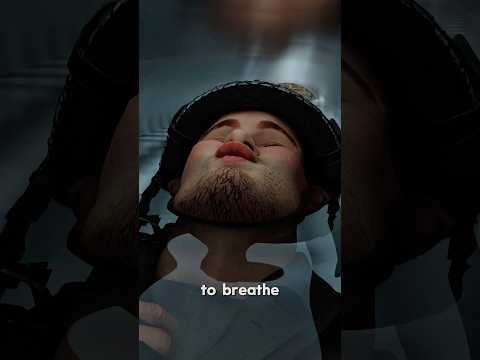

@theartofwarrr
Art of War. Same broad niche, same animation category. But the scripts run through our AI Scripting Protocols, so they hit a different structure every video. Still AI-assisted. Not repetitive. Monetized and scaling.


Raw ChatGPT output pasted directly as your script. Generic "humanize this" prompts. Perplexity-and-burstiness checkers used as a substitute for a real scripting system.
Prompt — Script Variety Checker
DIY auditIf you haven't moved to AI Scripting Protocols yet, this is the minimum check to run weekly. Paste your last 3 scripts and Claude will show you where they structurally overlap.
You are a YouTube script auditor looking for "inauthentic content" templatization — the pattern YouTube's Gemini AI flags when scripts from the same channel share structure.

I will paste my last 3 scripts below. For each:
1. Extract the opening structure (first 3 sentences).
2. Extract the transition phrase (how the creator moves from hook to main body).
3. Extract the closing beat (how the creator wraps).

Then output:
— A comparison table showing where all 3 scripts use the same structure.
— Specific phrases that repeat verbatim across 2 or 3 of the scripts.
— A rewrite of Script #1's opening that breaks the pattern while keeping the hook strength.

Be ruthless. Assume YouTube's AI will catch anything I miss.

MY LAST 3 SCRIPTS:
[paste here]
Real Footage Beats AI Slop — Complexity Is Camouflage
The more complex and varied your footage is, the harder it is for the algorithm to detect inauthenticity. Pure AI slideshows are the #1 inauthentic trigger. Real footage, real edits, real variety — that's camouflage.
This fitness creator stitches real human demonstrations of 5 different chair exercises, with real body movement, real camera angles, real cuts, all inside a single 7-minute video. The footage complexity alone makes it nearly impossible for the algorithm to pattern-match against anything else on the platform.

- Mix real footage with AI-generated visuals. Don't go 100% AI.
- Every AI image gets a manual edit — crop, filter, zoom, overlay. Never use raw AI output.
- For history, use real archival photos and documentary clips. For science, use real experiments and public-domain footage.
- Add visual variety inside a single video: b-roll, text overlays, screen recordings, archival, AI — all in one.
The single-AI-image-plus-voiceover-for-20-minutes format. The slideshow of 10 AI images with pans and zooms. Any video a viewer could describe as "visually boring" is already halfway to demonetized.
Add Net Information Gain
This is what YouTube's Gist filter — the pre-screener that runs before Gemini — is actually measuring. It compares your video to the top search results for your topic. If you're saying the same thing, your distribution gets killed before real humans ever see it. Your video has to contain something Google hasn't already indexed.
- Before you record, Google your topic.
- Watch the top 5 YouTube results.
- Answer this in one sentence: "What's in MY video that's not in any of those 5?"
- If you can't answer, you're about to produce slop. Don't record yet.
- If you can, that sentence becomes your hook.
Regurgitation of consensus knowledge. If your whole video could be reconstructed by asking ChatGPT "tell me about X," you have zero information gain. That's what the Gist filter exists to catch.
How To Appeal (If You Already Got Hit)
A huge number of 3D animation channels got removed in the 2026 wave. Only the creators who knew how to appeal got them back. The process is public now. Here's the exact playbook.
Stage 0 — MCN Protection (before you ever need it)
Join an MCN (Multi-Channel Network) early, especially if your niche is in a "dangerous" category (3D animation, commentary, heavy AI-assist). MCNs can escalate directly to YouTube partner reps when automated appeals fail. This is the single biggest insurance policy you can buy before you get hit.
Stage 1 — Clean up the channel (in the 7-day window)
You have 7 days from the demonetization date to submit your appeal. Use them. The channels that show visible human intervention during this window have a much higher success rate than the ones that appeal untouched.
- Private your most repetitive videos — do NOT delete. Deletion flags the system further. Privating quietly removes them from the channel page without adding another negative signal.
- Refresh titles and thumbnails on the videos you keep — break the patterns YouTube's AI locked onto.
- Upload one or two genuinely different videos if you can — proves the channel is active and varied, not on autopilot.
Stage 2 — The Appeal Video
Make a video on the demonetized channel explaining your process. This is your actual evidence to YouTube. Do it right and the current playbook runs around an 80% success rate.
- Webcam on. If you don't have one, hire a face on Fiverr to read your script. A human face in frame raises the success rate significantly.
- 3 to 5 minutes, hard cap. Not 15. YouTube reviewers don't have time for long appeals, and longer actually hurts you.
- Never apologize. No "I'm sorry," no "I know my content might be borderline." Framing it as your fault flags the reviewer to reject. Frame it as "YouTube's algorithm got this wrong" — you are making an informational appeal, not a guilt plea.
- Show your editing workflow on screen. Screen-record your process — script to voice to edit to upload. If you outsource editing, ask your editor to send the screen recording. This is the single strongest piece of evidence.
- Edit the appeal video itself well. Text overlays, clean cuts, no messy sound effects. If the appeal video is low-effort, YouTube assumes the channel is too.
- Submit the video as your appeal evidence in YouTube Studio.
Stage 3 — Public Pressure
If the appeal gets rejected, post the same appeal video publicly on Twitter tagging @TeamYouTube. Re-upload it on YouTube itself. Don't delete the original appeal — you want the record.
Stage 4 — Go Viral
Drive maximum reshares. The bigger the signal, the higher the chance a human at YouTube actually pulls your case out of the auto-rejection queue. Loop in creators who'll signal-boost. Most recoveries happen at this stage.
Do 3 of these this week.
If you do, you will never need Tip 7. If you've already been hit — start at Tip 7 today.
Join The Art of YouTube